


How to Choose an OEM Mattress Manufacturer
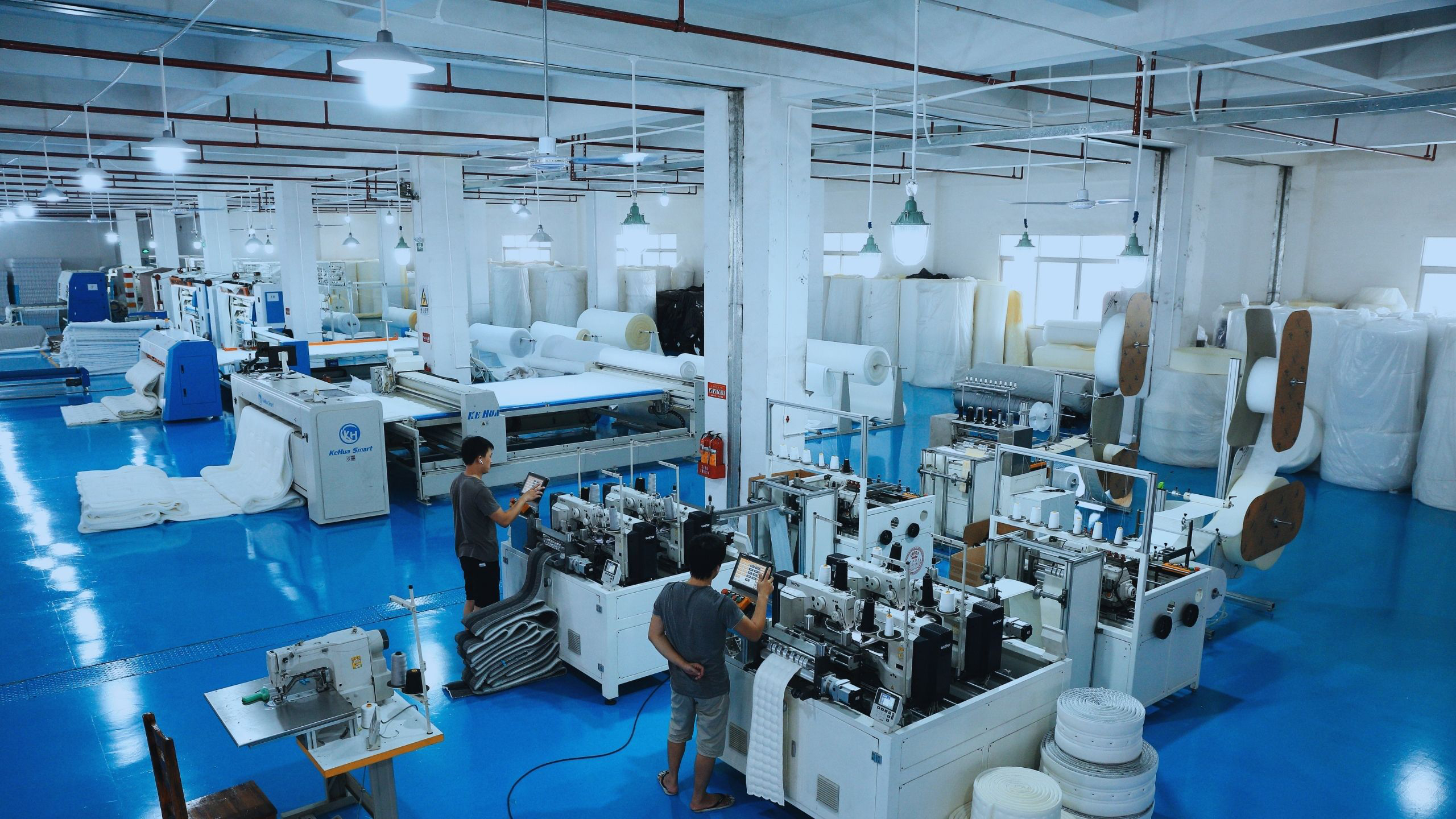
Before you sign with an original equipment manufacturer (OEM) for mattresses, get written answers on eight points: who makes the foam, who develops the product, how it is tested, the minimum order quantity (MOQ), the sampling time, the certifications, the packing method, and what you can customize. Buyers who compare factories on unit price alone tend to learn about MOQ, sampling delays, and fire-standard limits after they have paid a deposit. The eight checks below show what to ask, what a solid answer looks like, and how Sikoala answers each one.
The table gives the short version, so you can use it as a checklist when you talk to any factory:
| Check | Question to ask the factory | Why it matters |
|---|---|---|
| 1. In-house manufacturing | Do you make your own foam, or buy it in? | Decides who controls quality and consistency |
| 2. Design and development | Who turns my specification into a sample? | Decides how fast a new model reaches production |
| 3. Testing and quality control | What do you test, and can you trace a batch? | Decides whether defects are caught before shipping |
| 4. MOQ and sampling time | What is the minimum order, and how long is a sample? | Decides your cash commitment and launch date |
| 5. Certifications and fire standard | Which certificates do you hold for my market? | Decides whether the product can legally be sold |
| 6. Packing method | Can this mattress be roll-packed? | Decides freight cost per piece |
| 7. Market experience | Which markets do you already ship to? | Decides how many sample rounds you need |
| 8. Customization scope | What can I change besides the label? | Decides how different your product can be |
Check 1: Does the factory make its own foam?
A factory that produces its own foam controls the largest quality variable in a foam or hybrid mattress. A factory that buys foam blocks from a third party depends on that supplier for density, firmness, and consistency from batch to batch.
Ask where the foam is poured and whether you can see the foaming line during a visit or video call. A clear answer names the location and the process. A vague answer usually means the foam is bought in.
Sikoala’s answer: We produce polyurethane (PU) foam on automated lines at our own factory in Zhangzhou, China, and build it into mattresses, toppers, and pillows in the same facility. See our production process and the foam types and grades we make.
Check 2: Who develops the product?
A capable OEM factory has its own development team that turns your specification into a working sample without outsourcing the design. That team is also what separates OEM service from original design manufacturer (ODM) service, where the factory proposes the design and you choose from it.
Ask who will handle your project, and ask to see models the team developed for other buyers in the last two years. If the factory can only show catalog items, expect limited help when your specification needs adjusting.
Sikoala’s answer: We take both OEM and ODM orders. You can send a full specification, or start from one of our existing constructions and change it.
Check 3: What does the factory test, and can it trace a batch?
Testing equipment and a traceability system are what turn a quality promise into a record you can check. Raw materials such as foam, pocket springs, and fabric each need testing before they go into a mattress, and the finished product needs durability testing after.
Two questions separate a real quality system from a claim. First, ask for a list of the tests run in-house and the ones sent to outside laboratories. Second, ask how the factory would find every mattress made from one foam batch if a defect appeared after shipping.
Sikoala’s answer: Our quality management system is certified to ISO 9001:2015, the International Organization for Standardization (ISO) standard for quality management. Four of the tests we run in-house show what that covers:
- Indentation load deflection (ILD) hardness test. Measures foam firmness, so support stays consistent from one mattress model to the next.
- Ball rebound test. Measures how responsive the foam is, which sets the balance between softness and support.
- Permanent deformation test. Compresses the foam repeatedly to confirm it keeps its shape over years of use.
- Grams per square meter (GSM) test. Verifies the weight of cover fabrics and other materials.
The full equipment list is on our quality testing and manufacturing capabilities page.

Check 4: What are the minimum order and the sampling time?
MOQ and sampling time set your cash commitment and your launch date, so get both in writing before you discuss price. A low unit price means little if the minimum order is larger than your first season can sell.
Three numbers matter here, and a factory should be able to state all of them without hesitation:
- Minimum order quantity. Ask whether sizes and models can be mixed within the minimum.
- Sampling time. Ask how long a first sample takes, and how long a revised sample takes.
- Production time. Ask when the clock starts: at order, at deposit, or at sample approval.
Sikoala’s answer: Our minimum order is one container, and sizes and models can be mixed. A foam sample is ready in about 7 days. Production takes about 30 days after payment is confirmed. Current terms are on our OEM mattress manufacturer page.
Check 5: Which certifications and fire standard apply to your market?
The certificates a factory holds decide whether your mattress can be sold in your market, and the fire standard changes both materials and cost. Tell the factory your destination country before the first sample, not after.
Fire rules differ by country. The United States requires mattresses to meet 16 CFR Part 1633, the federal open-flame standard. The United Kingdom uses BS 7177 for mattresses. A factory that already ships to your market will know which standard applies and which materials pass it.
Ask for copies of current certificates, and check the certificate number and expiry date against the issuing body’s public database.
Sikoala’s answer: Our foams are certified by CertiPUR-US®, and our mattresses are tested to OEKO-TEX® Standard 100. Both are listed on our certifications page. The fire-retardant standard is one of the items you specify for each order.
Check 6: Can the mattress be roll-packed?
Packing method decides how many mattresses fit in a container, and that number drives your freight cost per piece. Roll-packing compresses and rolls the mattress into a carton. Flat-packing ships it at full size.
Not every construction can be rolled, so ask about packing while the design is still open. Ask how many pieces of your model fit in one container, and how long the mattress can stay compressed before it must be opened.
Sikoala’s answer: We ship foam, pocket spring, and hybrid mattresses roll-packed. Our automated compression and packing article shows the process, and the roll-up mattress guide covers setup and recovery time. Container loading quantity depends on the size and thickness of the mattresses in your order, so we calculate it for each quotation.

Check 7: Which markets does the factory already ship to?
A factory with orders in your market already knows the firmness, sizes, and cover styles that sell there, which shortens development. Mattress preferences differ by country, and a factory new to your market will need more sample rounds to get the feel right.
Ask which countries the factory ships to today, and ask for a reference buyer in your region. Experience in a neighboring market is useful. Experience in yours is better.
Sikoala’s answer: We have made mattresses since 2005 and ship to more than 60 countries. Our case study on hotel mattresses for Canada shows one project from specification to delivery.
Check 8: What can you change besides the label?
The customization scope decides how different your product can be from every other brand buying from the same factory. A factory that only changes the label is selling you its catalog.
Ask for the full list of what you can specify, and ask which changes add cost and which do not.
Sikoala’s answer: An OEM order with us can change eight things: structure, foam composition, firmness, height, cover fabric, fire-retardant standard, packaging method, and private labeling. Pocket spring units are available in 3-zone, 5-zone, and 9-zone systems.
Frequently Asked Questions
What is the difference between OEM, ODM, and private label mattresses?
In an OEM order, you supply the specification and the factory builds to it. In an ODM order, the factory supplies the design and you choose or adjust it. Private label means the factory’s existing product carries your brand, with few or no changes to the product itself.
What is the minimum order for an OEM mattress?
It depends on the factory. At Sikoala, the minimum is one container, and you can mix sizes and models within it.
How long does an OEM mattress sample take?
At Sikoala, a foam sample is ready in about 7 days. Production takes about 30 days after payment is confirmed.
Should I buy from a manufacturer or a trading company?
A manufacturer controls production and can answer the eight checks above directly. A trading company passes your questions to a factory you may never see. If you are sourcing from China, our guide to buying China mattresses for your brand covers where to find factories and how to compare them.
Next Step
Send us your target market, mattress type, and expected first-order volume, and we will reply with a specification proposal and a sample plan. Contact Sikoala or see our terms on the OEM mattress manufacturer page.