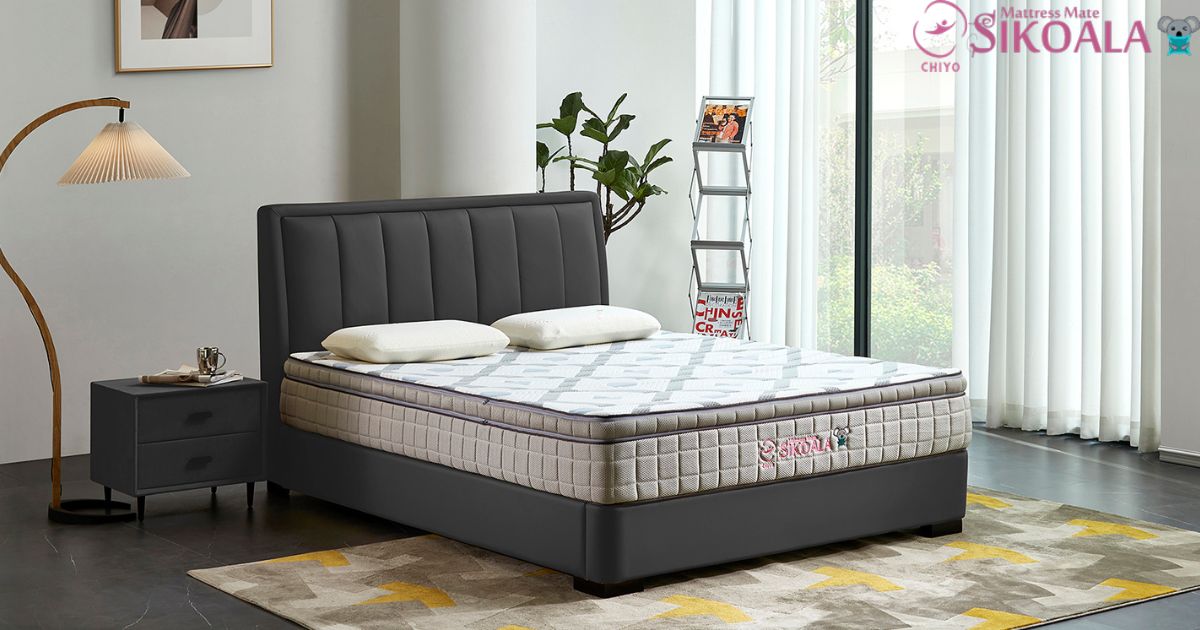
Basic Guide of Memory Foam Mattress

Memory foam mattress - Sikoala

Memory foam is a term you’ve probably heard before. It can also charade under two other names: viscoelastic foam and temper foam. It is one of the main types of foam found in beds. It has the ability to contour and a forgiving, supple surface. In this post, we will go through everything you need to know about memory foam mattresses. 

Pros & Cons of Memory Foam

What You’ll Love

  • Exceptional pressure relief – The foam contours to shoulders, hips, and lower back, reducing tossing and turning.

  • Motion isolation – Open-cell structure absorbs movement, so one sleeper’s flips don’t disturb the other.

  • Custom firmness options – Density, ILD, and gel-infusion can be tuned from plush to extra-firm.

  • Silent support – No metal coils means no squeaks, ideal for light sleepers.

Potential Drawbacks

  • Heat retention – Traditional viscoelastic traps body heat. Cooling gel beads, graphite, or open-cell designs solve this.

  • Slow response – The “hug” can make changing positions feel sluggish; hybrid constructions add bounce.

  • Edge compression – Foam beds have softer edges than reinforced‐coil models; look for high-density edge support if you sit on the side often.

Memory Foam vs. Other Mattress Types

FeatureMemory FoamLatex FoamInnerspring
Pressure Relief★★★★★★★★★☆★★☆☆☆
Motion Isolation★★★★★★★★★☆★★☆☆☆
Cooling OptionsGel, phase-change coversNaturally airyCoil airflow
BounceLowMedium-HighHigh
Price Range$$–$$$$$$$–$$$$

Memory Foam Beds Becomes Popular

Memory foam beds have become popular among those who want better support and pressure relief while they sleep. The unique material used to make these beds may not have served the original purpose NASA envisioned, but it’s doing a lot of good for people decades later as a mattress material.

What Is Memory Foam Mattress

  • Made up of regular polyurethane as base layer

Memory foam mattresses are made up of regular polyurethane as the base layer. The memory foam sits on top of this, along with any other padding layers the mattress may need.

  • Addition of flame-resistant fabric

Federal safety guidelines require the addition of a flame-resistant fabric barrier on top of the mattress, to protect against possible fire. Some manufacturers also put fire-resistant additives into the foam, too, for another layer of fire safety. Then they add a fabric as a cover for an appearance that completes the look.

  • Conform to you body

Memory foam mattresses are made from a special type of plastic called viscoelastic foam. The material is designed to conform to your body, giving you comfort and support where you need it most.

  • Slowly return to original shape

Memory foam is a viscoelastic polymer that can be molded into different shapes. It’s made up of many tiny air pockets that expand when pressure is put on them, then slowly return to their original shape once the weight is removed.

Additional Layers Help Keep You Comfortable 

Since memory foam doesn’t spring back quickly enough like traditional mattress materials do, some people find that they sink too far into their bed or feel stuck in one position while they sleep. However, this can be avoided by choosing a mattress with additional layers or features that help keep you comfortable while sleeping on the bed.

More Expensive Than Traditional Spring Mattresses

Memory foam mattresses are generally more expensive than traditional spring mattresses, but they can be more economical than other types of foam mattresses if you plan to keep your mattress for many years. A memory foam mattress has an expected lifespan of 10-15 years, depending on how often you rotate, flip or change positions while sleeping.

How to Choose the Right Memory Foam Mattress

  • Density & ILD – 50–70 kg/m³ (3–4 lb/ft³) offers balanced support; higher density increases durability.

  • Cooling Tech – Gel-infused, copper-infused, or ventilated foam relieve heat build-up.

  • Certifications – Look for CertiPUR-US® and OEKO-TEX® to ensure low VOC emissions.

  • Edge Support – High-density perimeter foam prevents roll-off.

  • Cover Fabric – Removable, breathable, and preferably flame-resistant per U.S. CFR 1633.

  • Trial & Warranty – 90-night trials and 10- to 15-year warranties are industry benchmarks.

Why Choose a Sikoala Memory Foam Mattress ?

  • 18+ years of foam-crafting expertise—OEM/ODM for 50 + global brands.

  • Proprietary open-cell, gel-infused viscoelastic keeps sleepers up to 2 °C cooler in lab tests.

  • CertiPUR-US® certified and produced in an ISO 9001 facility for consistent quality.

  • Vacuum-compressed, roll-packed packaging cuts freight costs up to 60 % and lowers CO₂ emissions.

  • Customizable firmness, thickness, and cover fabrics for private-label buyers.

FAQs

Q1: Do memory foam mattresses sleep hot?
A: Older models could, but modern open-cell and gel-infused foams, plus breathable covers, dissipate heat effectively.

Q2: Can I use a heated blanket?
A: Yes, but keep it on a low setting; excessive heat can soften the foam’s structure.

Q3: How long does the “new-foam smell” last?
A: Off-gassing typically clears within 24–72 hours in a well-ventilated room.

Q4: Are memory foam beds good for back pain?
A: Many chiropractors recommend medium-firm memory foam for spinal alignment and pressure relief, but individual preference matters.

Q5: What is the weight limit?
A: Sikoala models support up to 300 kg (660 lb) combined weight when used on a proper base.

Ready to Feel the Difference?

Experience cooler, pressure-relieving sleep with a Sikoala Memory Foam Mattress. Contact our team today to request OEM samples or a private-label quote.

[/fusion_text]
[/fusion_builder_column][/fusion_builder_row][/fusion_builder_container]